
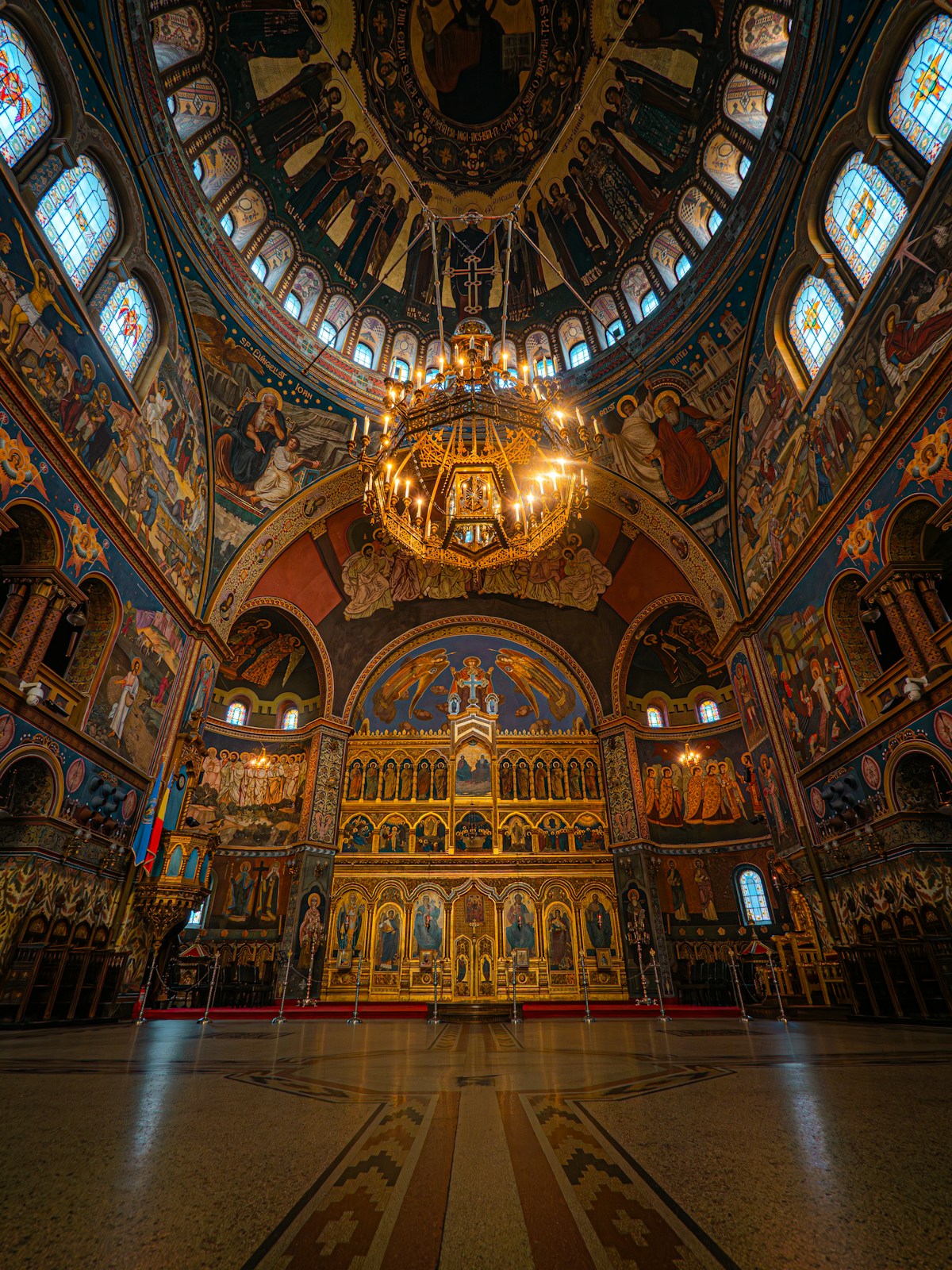
Bucovina has eight churches with 16th-century exterior frescoes, all UNESCO-listed, gathered in a small area — a density you will not find anywhere else in the world. Five days are enough to see the important ones without rushing.
Recommended base: Gura Humorului, the most central point for Voroneț, Humor and Moldovița, with good access to Sucevița. Guesthouses in the area generally cost 150–300 lei/night and often come with home-cooked food.
Day 1: Bucharest → Suceava (~450 km)
The drive to northern Moldavia is long — reckon on 6–7 hours, depending on how much of the Moldavia Motorway (A7) is open on your route. Leave early. In Suceava, see the Seat Fortress and the Church of St George (part of the UNESCO group). It is an arrival day, not a marathon.
Day 2: Suceava → Pătrăuți → Arbore → Sucevița
Start with the smaller, less crowded churches. Pătrăuți is the oldest surviving foundation of Stephen the Great; Arbore is known for its distinctive green. From there you climb to Sucevița, the largest and best-preserved painted monastery, with fortress walls and towers. Not to miss: the Ladder of Virtues on the north wall, a scene unique in Christian iconography.
Day 3: Sucevița → Moldovița → Putna
Passing through Marginea, you reach Moldovița, a 1532 foundation of Petru Rareș, recognised by its warm golden-yellow tones. Continue to Putna — not painted, but one of the country's most important monasteries, the resting place of Stephen the Great. These are hill roads, beautiful but not to be rushed.
Day 4: Voroneț and Humor (the triangle around your base)
The day of the stars, and they are close. Voroneț — just 4 km from Gura Humorului — is the most photographed, famous for the Voroneț blue and the Last Judgement scene on the west facade. Six km the other way, Humor (from 1530) impresses with its red tones. A tip that really matters: come to Voroneț in the morning, before 10–11 — after that it fills up, and the morning light brings out the colours best.
Day 5: return (or an extra day of nature)
The drive back to Bucharest is just as long, so leave early. If you have another day, the detour to Câmpulung Moldovenesc and Vatra Dornei is worth it, for mountains and clean air, perhaps with Probota (also UNESCO) in the south of the county.
Food and a few rules at the monasteries
- Come by car. Public transport to the monasteries themselves is rare and complicated; by car you do in 5 days what would otherwise take 10.
- The season. May and September–October are ideal: well-lit frescoes, no crowds.
- Decent dress is required (shoulders and knees covered); entry usually has a small fee, and photography inside is often forbidden or paid.
- The exterior frescoes can be photographed freely — morning light catches them best.
Because everything here revolves around the car — 450 km to get up there, then dozens of kilometres between monasteries on hill roads — a circuit like this is far simpler with a rental car taken right on arrival. With driveXplore you pick the car up at Otopeni, with unlimited mileage (handy when you easily rack up 1,500 km on a circuit) and accident & theft cover included.


