
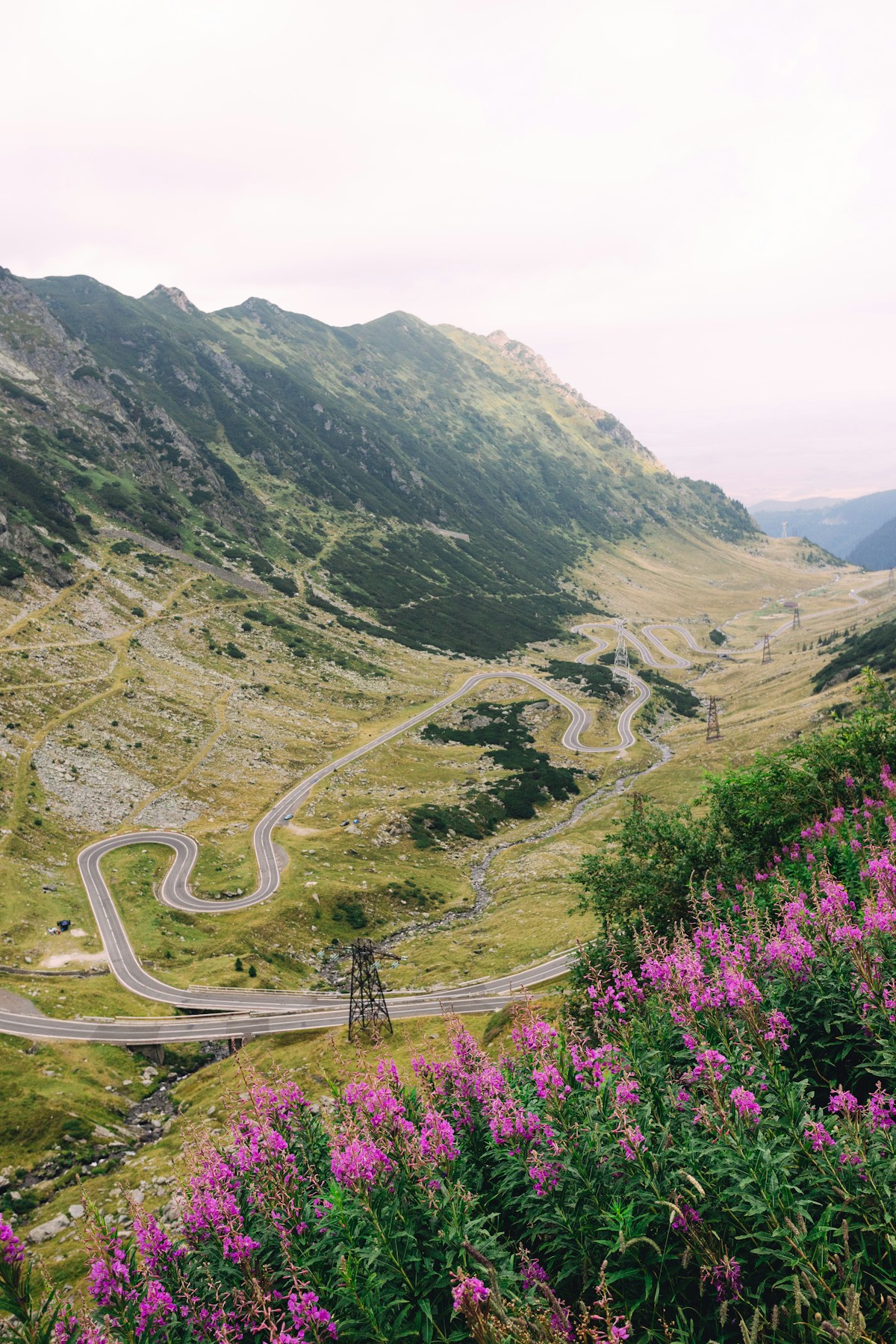
The Transfăgărășan (DN7C) is the road the Top Gear team called the best in the world, and it lives up to the fame — but it has a short season and a few traps worth knowing before you set off.
When it is open
The alpine section, between Piscul Negru and Bâlea Cascadă, is closed almost eight months a year due to snow. Legally it opens between 1 July and 1 November, but in low-snow years it opens earlier: in 2026 the road reopened on 12 June. Traffic on the ridge is allowed only in daylight, between 07:00 and 21:00, and in bad weather the road closes without notice — check CNAIR the very morning you leave.
What the road is like
It is a serious mountain road: tight switchbacks, hairpin bends, climbing to ~2,040 metres by the Bâlea tunnel. The recommended speed is 40 km/h, for good reason. On the way down, the real danger is overheating the brakes — use engine braking, do not ride the brake pedal downhill.
- There are no petrol stations on the mountain section. Fill up in Curtea de Argeș or Sibiu, depending on your direction.
- The bears really are by the roadside. Do not stop to feed them and do not get out of the car — it is dangerous and forbidden.
- In 2026, the Vidraru dam is being refurbished and the reservoir is due to be drained for the first time since 1974 — the scenery at the dam may look different from older photos.
What car to choose
You do not need a 4x4, but you do need a car with good brakes and an honest engine. A small petrol car copes perfectly if you do not overload it. If you come from a country where you drive automatic and are not used to a clutch, take an automatic — on switchbacks, with stops and hill starts, a poorly handled manual adds needless stress. Avoid caravans and very long cars: clearance is tight in some bends.
Stops to make
- Curtea de Argeș — the monastery and burial place of Romania's kings. An hour here before the climb.
- Vidraru dam and lake — the view from the crest and the statue of Prometheus.
- Poenari Citadel — the real castle of Vlad the Impaler, perched on a cliff; you reach it by climbing over 1,400 steps.
- Bâlea Cascadă and Bâlea Lac — the high point, with the cable car linking the two when the upper road is closed.
How much time to allow
Do not treat it as a simple crossing. Just the mountain section, driven at 40 km/h and with the usual stops, easily takes half a day. A good plan: leave Curtea de Argeș in the morning, climb to Bâlea at a relaxed pace around midday and descend towards Sibiu in the afternoon, staying overnight. With two days, pair it with the Transalpina (DN67C) further west.
Because the road has a short season and asks for a car you can rely on going up and down, many visitors do it precisely with a rental car taken in Bucharest or at Otopeni. With driveXplore you get unlimited mileage and accident & theft cover included, which matters on a mountain road where you want to think about the scenery, not the odometer.


